EV Battery Architecture: Cell to Pack (Part 1)
What exactly is a cell? What is a pack? And why does the distinction matter for EV innovation?
The Secret Inside Every Battery Cell | Advanced EIS Technology Explained

EV Battery Management: Thermal & Intelligence (Part 2)

EV Battery Architecture: Cell to Pack (Part 1)

Qnovo HSD: Battery Health for Energy Storage

Unlocking Battery Second Life: Smarter Diagnostics for EV Reuse | SAE Summit 2026

Qnovo HSD Configurable Architecture
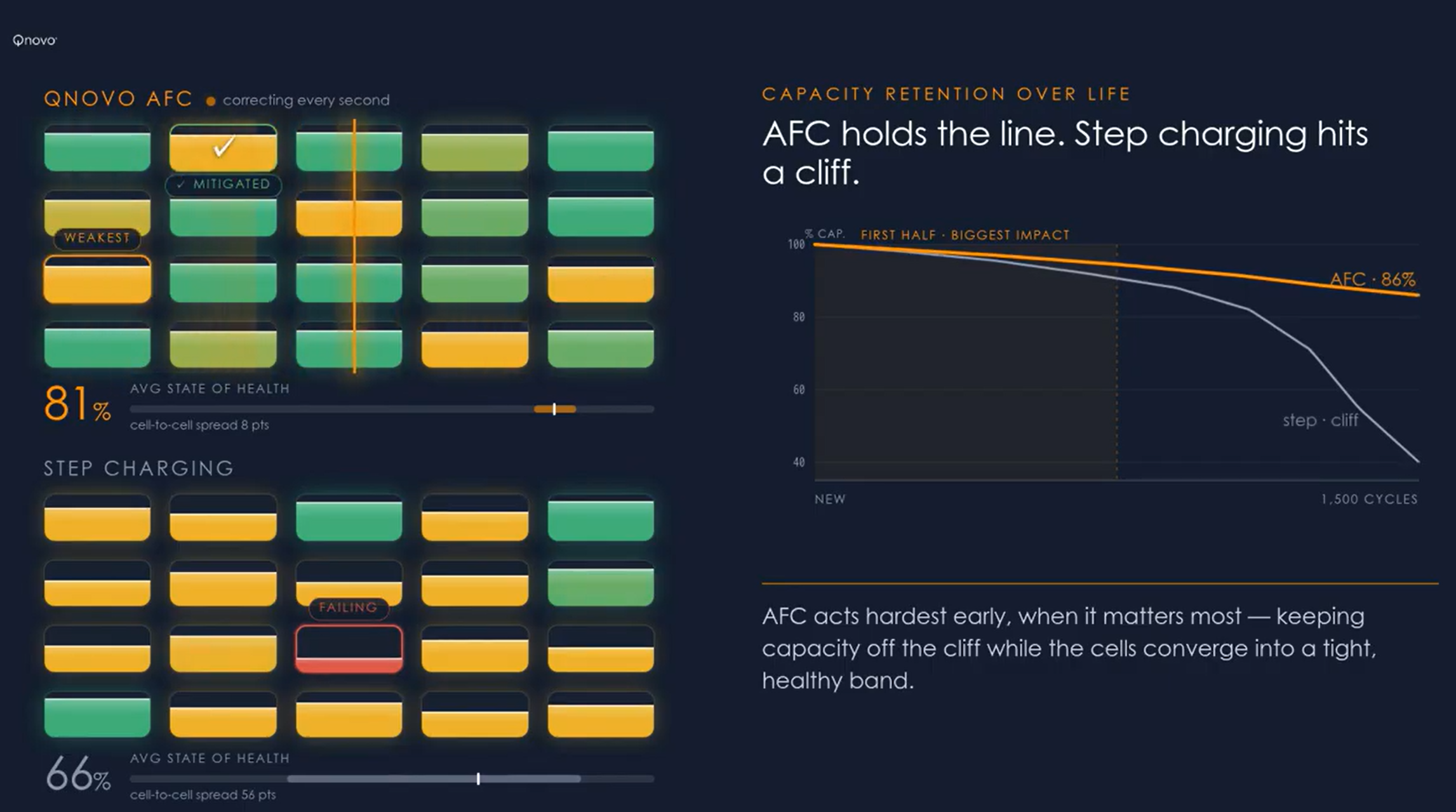
Qnovo Adaptive Fast Charging (AFC) versus Step Charging
Inside a Lithium-Ion Battery and How it Works
Battery Management Software Keeps Batteries Healthy, Safe & Performing Optimally

Batteries have become the workhorses of modern electrification

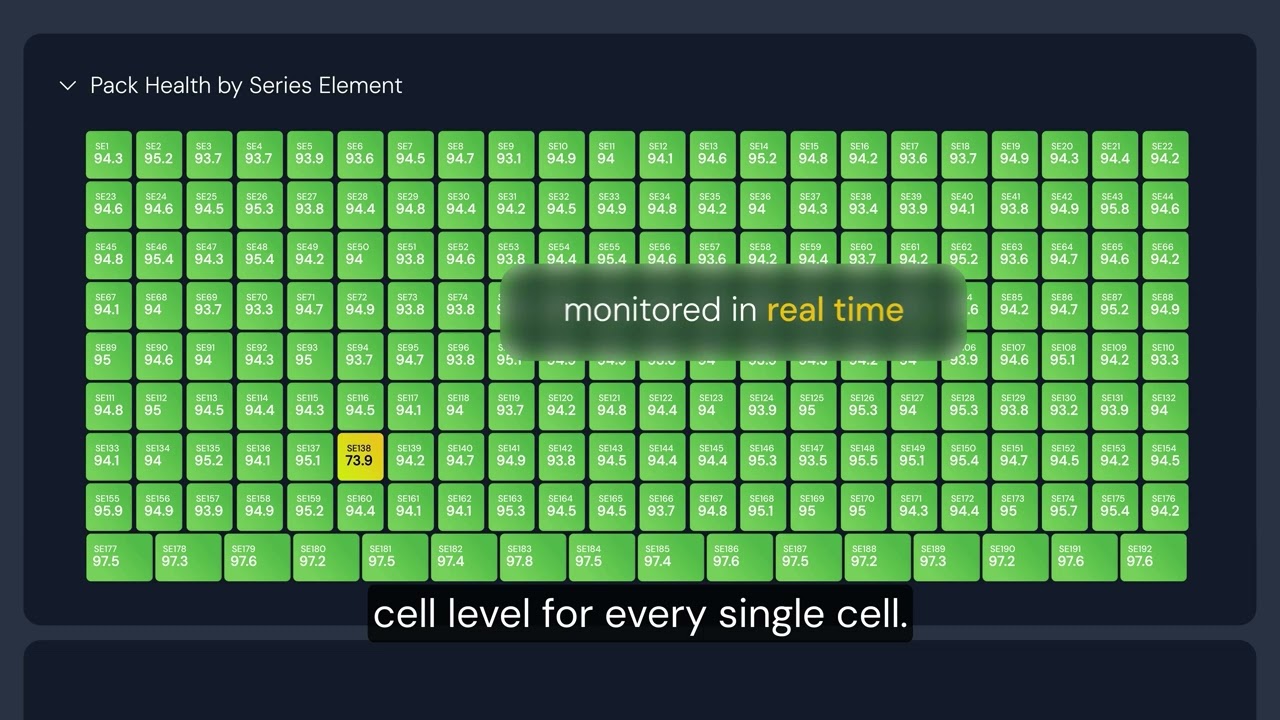
EV Battery Intelligence, Cell by Cell

Smarter Charging, Safer Power: The Qnovo Advantage

Video Transcript
.png)
What exactly is a cell? What is a pack? And why does the distinction matter for EV innovation?
The architecture impacts vehicle cost, weight, range, and ultimately, profitability.
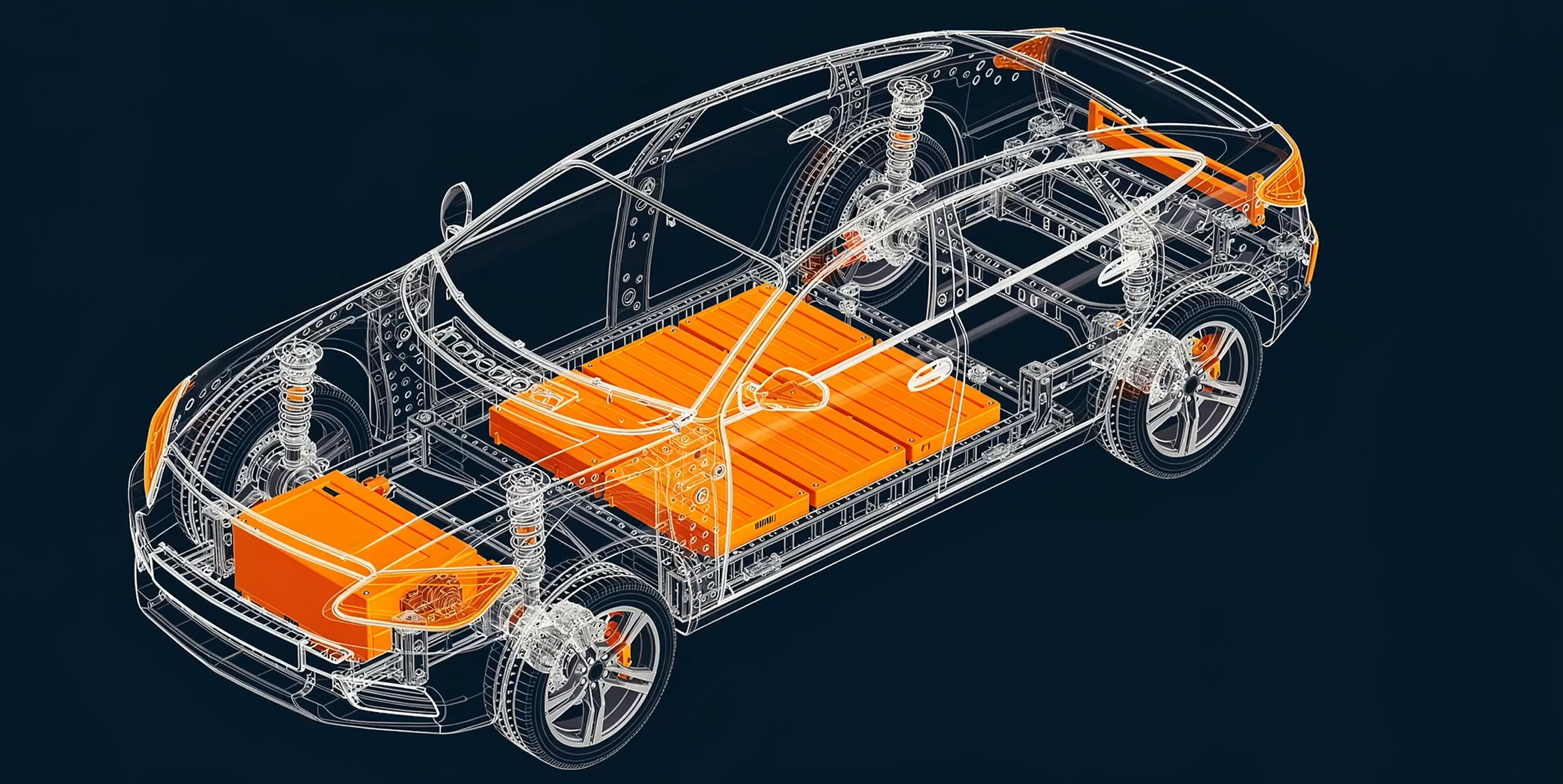
A cell is the basic energy unit; a pack is thousands of cells connected.
Why not one giant cell? Because stresses and heat are too hard to control at large scales. Smaller cells are safer.
Tesla transitioned to larger cells, reducing welds and simplifying assembly for the Model 3.
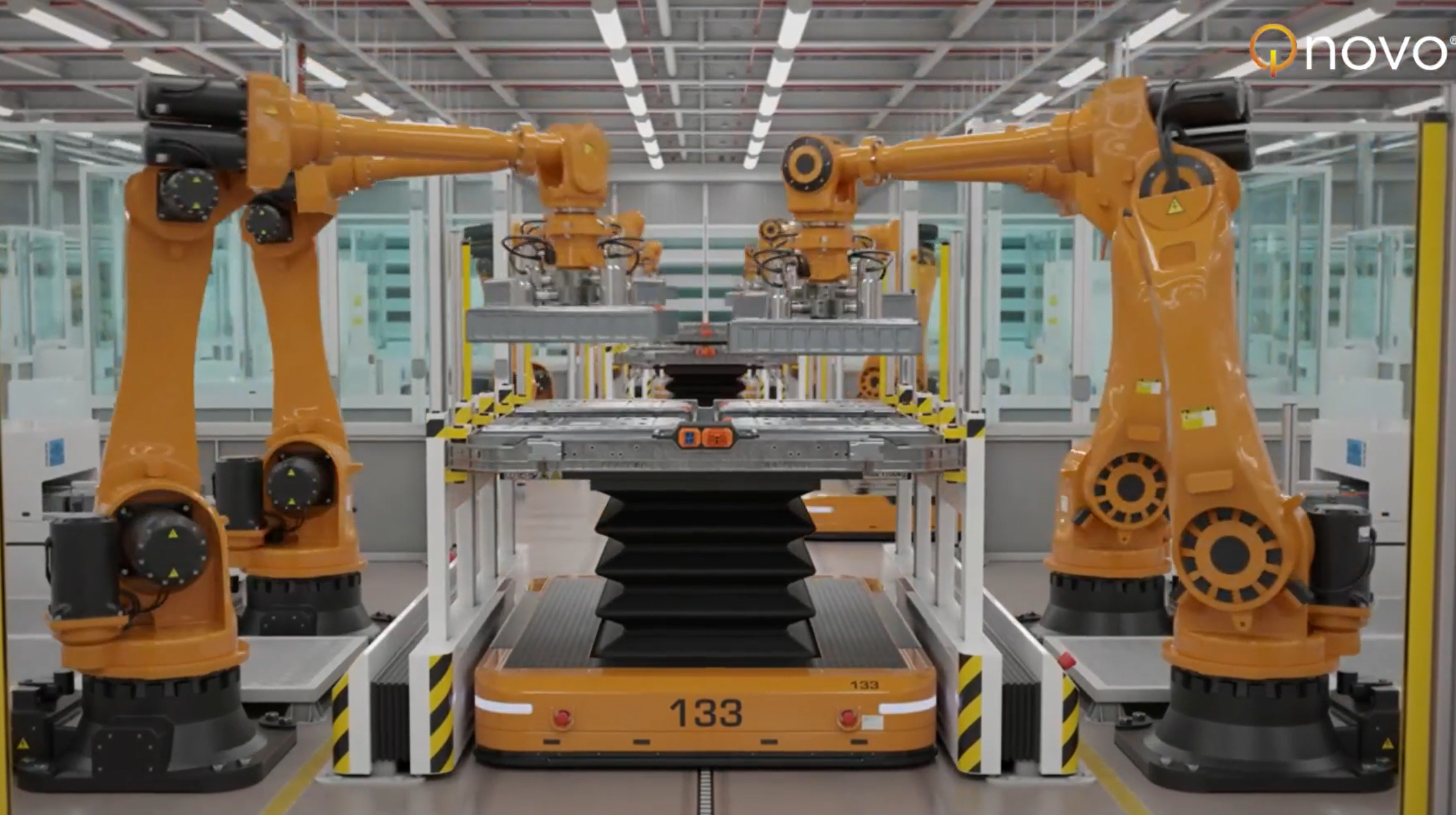
Assembled packs are complex—they must protect, cool, and monitor thousands of cells simultaneously.
Understanding this architecture is the first step toward a fully optimized EV system.
Visit Qnovo.com to learn more.