Aluminum Cathode Collector.
NMC Cathode.
Electrolyte Containing Separator.
Graphite Anode.
Copper Anode Collector.
When the charger is connected lithium ions stored in the cathode begin to move through the electrolyte toward the anode.
The lithium ions move through the separator layer and continue to move through the electrolyte toward the anode.
At the anode, lithium ions penetrate the graphite layers.
The lithium ions diffuse between the atomic layers of the graphite.
Equilibrium is reached when the lithium ions form a bond with carbon atoms.
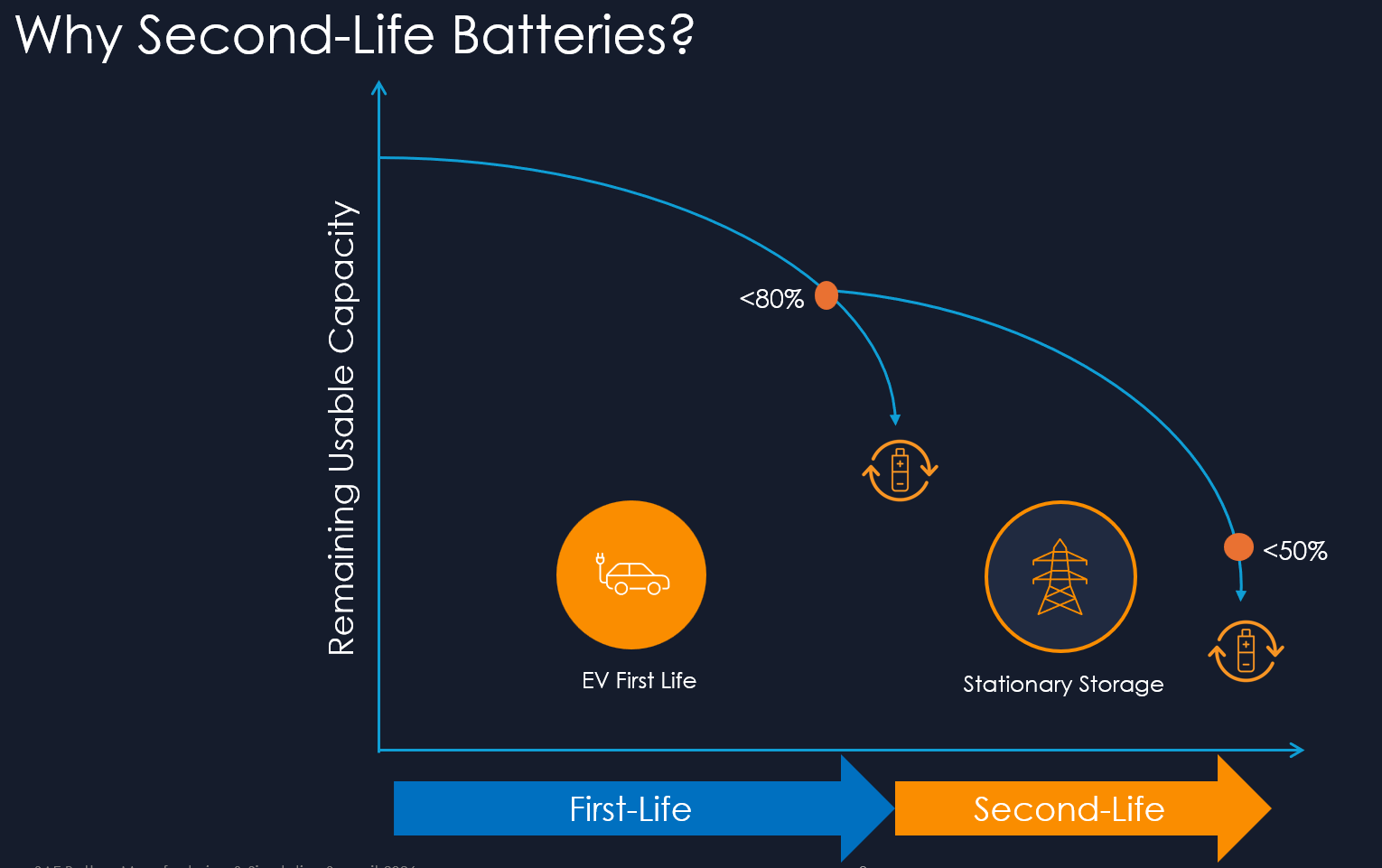
But if the graphite layer is damaged or aged it can accommodate fewer lithium ions.
Consequently, the battery loses its ability to store lithium ions, and its capacity drops.
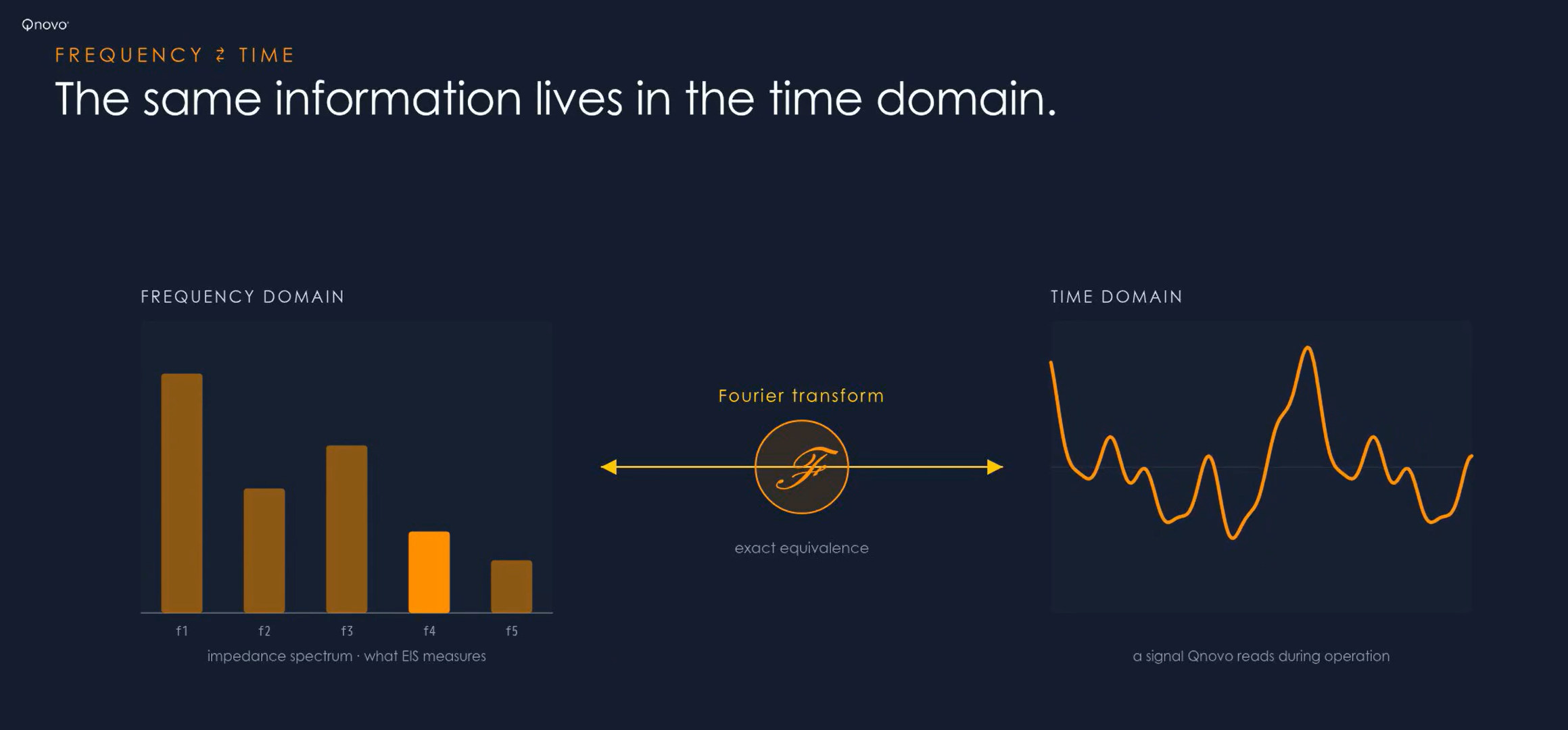
Measuring ion diffusion is a powerful method to detect early damage to the call and assess its health.
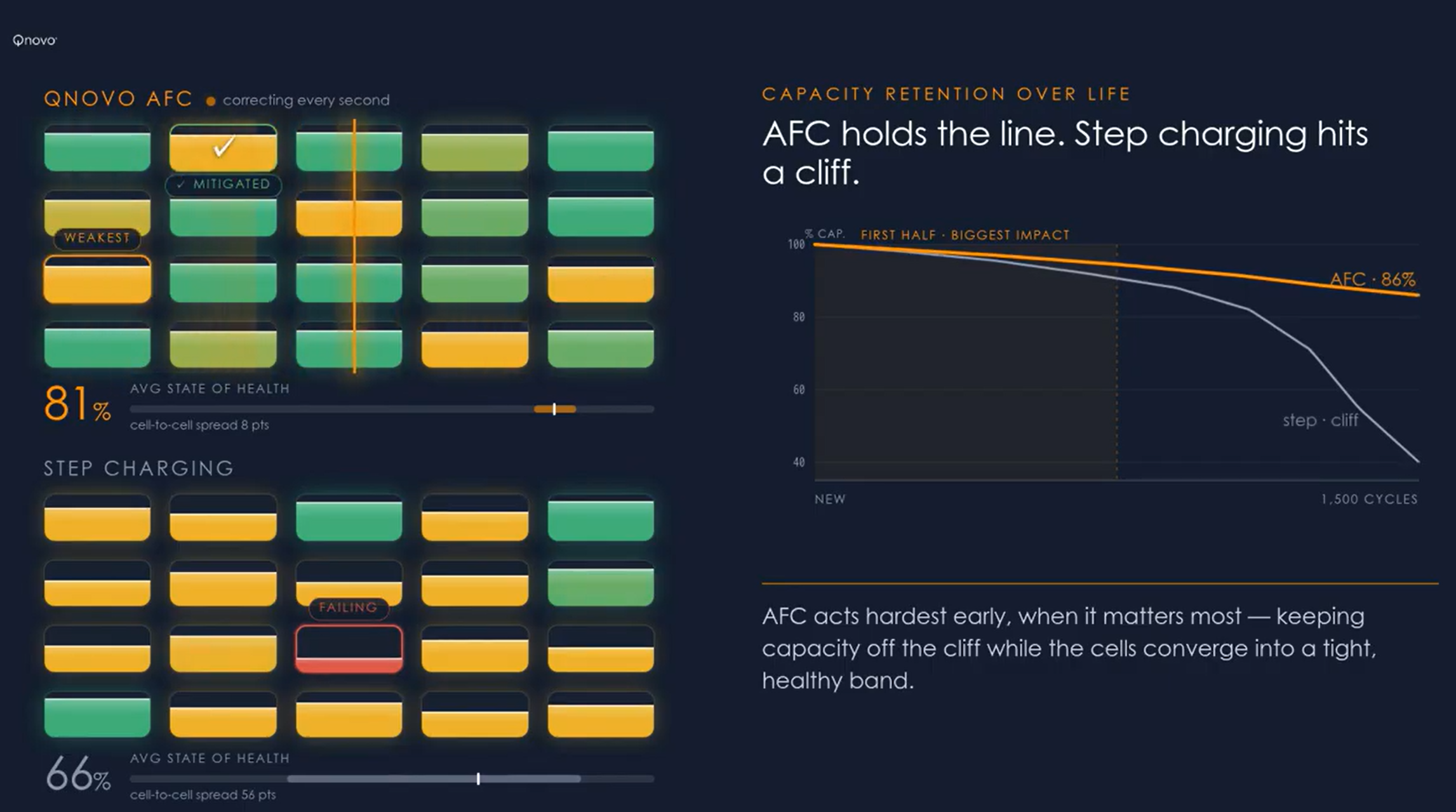
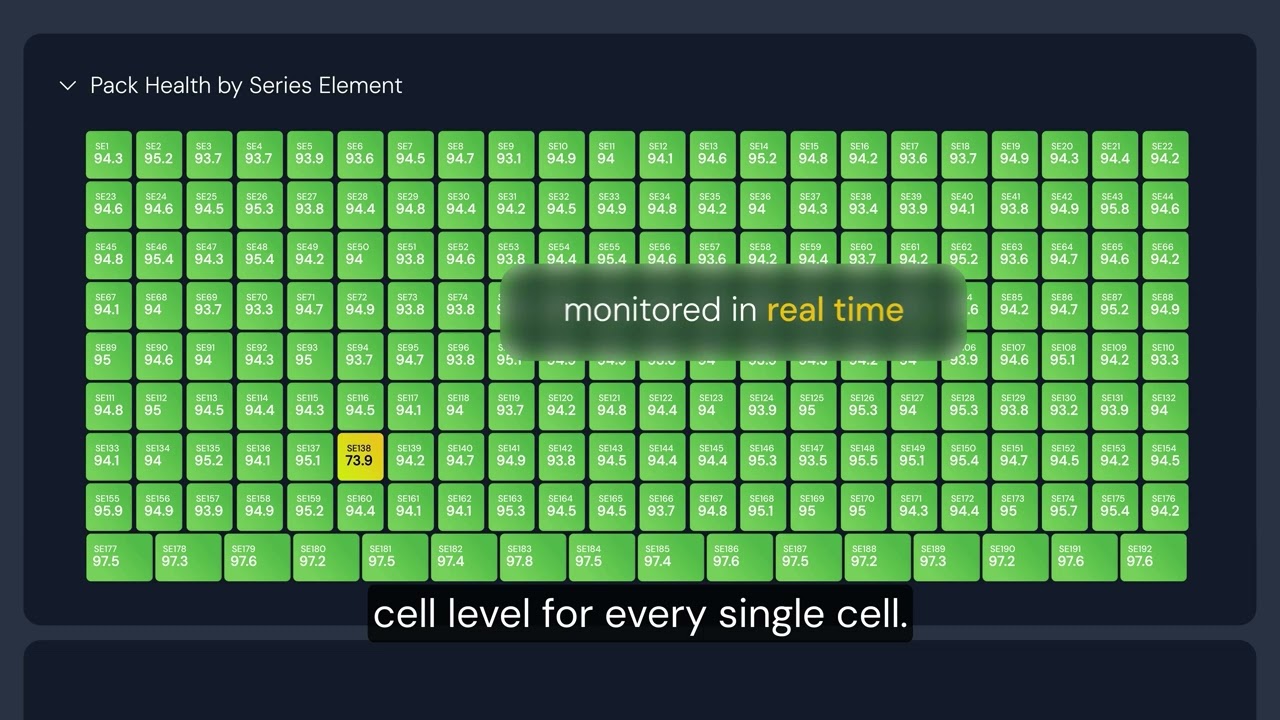
Our algorithms operate at the cell level, assessing each cell and identifying the weakest cell in the pack.
The weakest/suspect cell determines the health of the pack.
Mitigating the weakest cell in real-time.
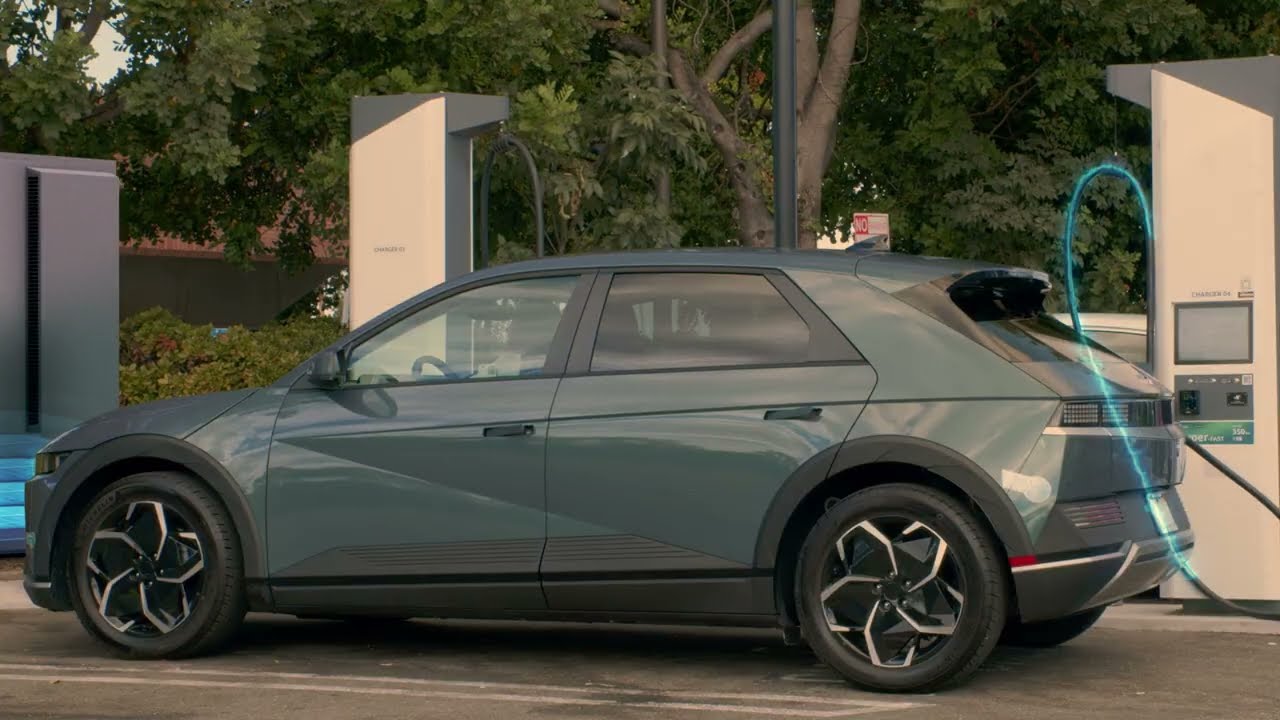
Qnovo can charge without compromising battery health.







.png)

